
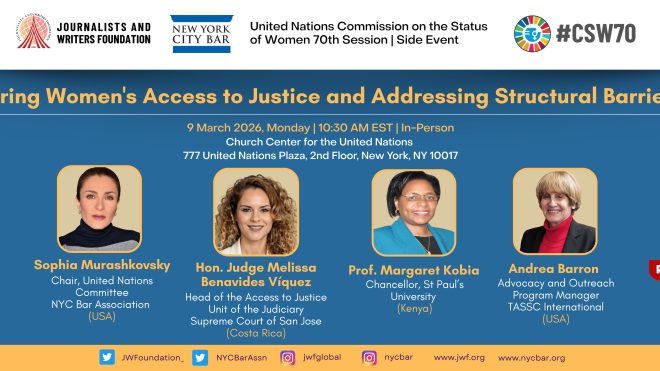
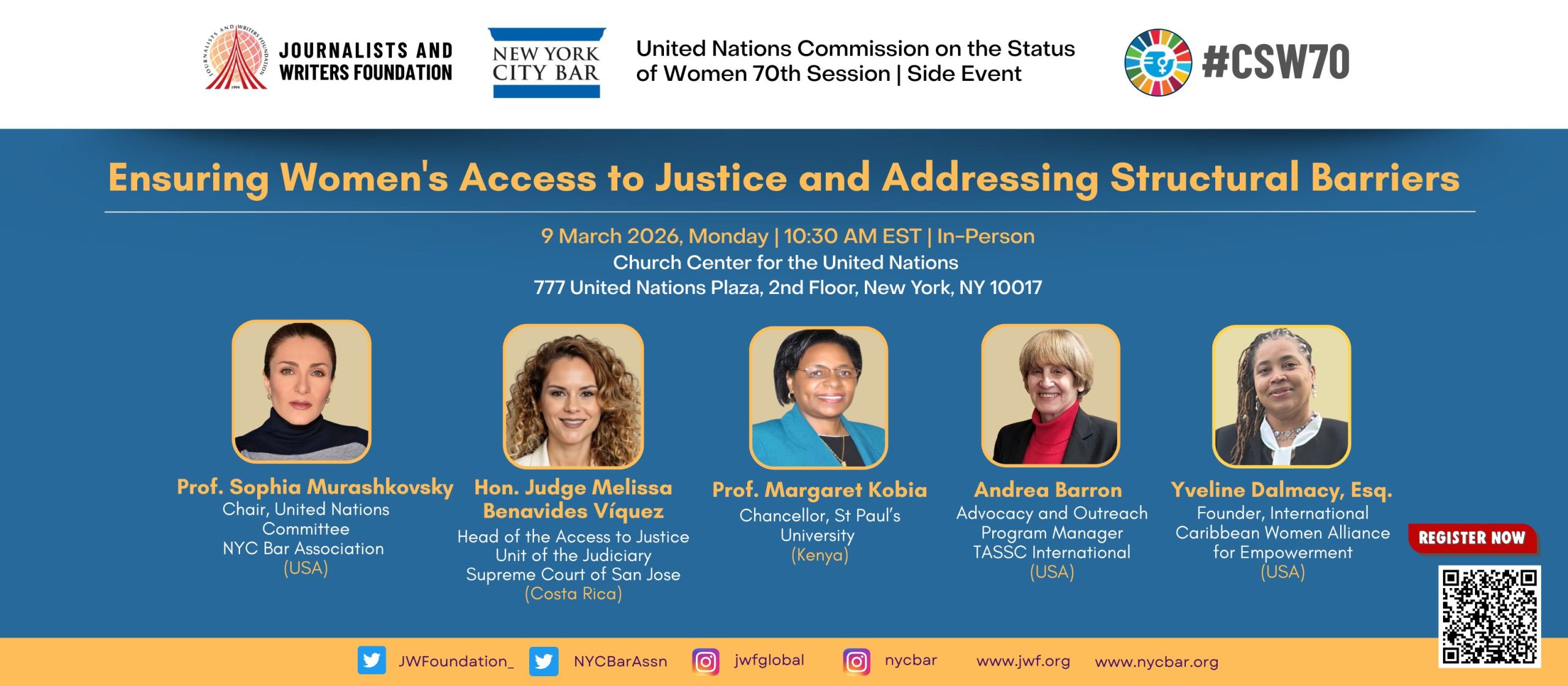
CSW70 PANEL DISCUSSION
Ensuring Women`s Access to Justice and Addressing Structural Barriers
9 March 2026 | 10:30 AM EST | In-Person
Church Center of the United Nations
777 United Nations Plaza, New York, NY 10017
For the first time in over two decades, the world has now more autocracies than democracies. This shift has intensified human rights violations against women in public life, in particular those in politics, the judiciary, human rights advocacy, and journalism. Women face growing risks of discrimination, systemic barriers, online violence, defamation, and sexual abuse, often with little, if any, accountability for perpetrators. The persistence of discriminatory laws and practices, the erosion of the rule of law by increasing efforts of undemocratic regimes, are continuing to entrench violence, gender inequality and stereotypes globally. These systemic challenges also hinder women’s access to justice and meaningful participation in society.
According to “Women`s Rights in Review 30 Years after Beijing,” (UN Women, 2025) between 1995 and 2024, 1,531 legal reforms around the world aimed to advance gender equality. Despite this progress, women still have only 64% of the legal rights of men. Gaps in legislation continue to trigger setbacks across key areas of women`s rights, including access to justice for survivors of sexual violence, protection from domestic violence, prevention of child marriage, the safeguarding of women’s rights in the digital realm, as well as in economic and political life. The weakening of women’s access to justice not only perpetuates inequality but also undermines progress toward sustainable peace. As the international community convenes at CSW70, it is vital to spotlight women`s equal access to justice, share best-practices, and explore strategies for legal and structural reforms to protect and promote women’s rights worldwide.
Achieving gender equality is possible, but it requires intersectional, integrated, comprehensive policy actions that reinforces legal frameworks. Therefore, this panel seeks to foster meaningful dialogue, identify and propose concrete actions to uphold women’s human rights and ensure access to justice, promote inclusive legal systems, and dismantle structural barriers.

Sophia Murashkovsky (Moderator)
Chair, United Nations Committee
NYC Bar Association
(USA)

Hon. Judge Melissa Benavides Víquez (Cosa Rica)
Head of the Access to Justice Unit of the Judiciary
Supreme Court of San Jose
(Costa Rica)
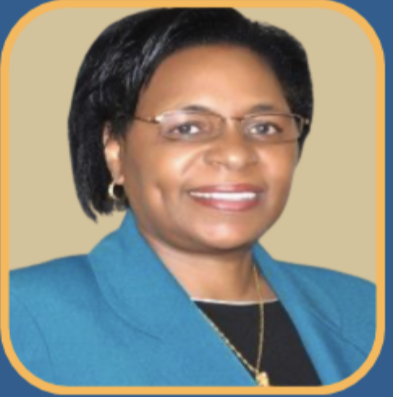
Prof. Margaret Kobia
Chancellor, St Paul’s University
Former Cabinet Minister for the Ministry of Public Service,
Youth, Gender, Social Protection and Special Programs of Kenya
(Kenya)

Andrea Barron
Advocacy and Outreach Program Manager
TASSC International
(USA)
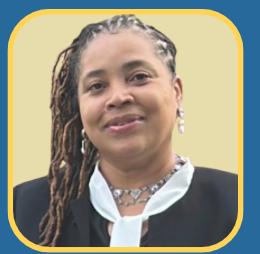
Yveline Dalmacy, Esq.
Founder, International Caribbean Women Alliance for Empowerment
(USA)
Topics for Discussion
- Access to Justice for Women and Girls
Challenges faced by victims of violence, discrimination, and human rights violations in seeking justice; the role of judicial and law enforcement institutions in ensuring fair, accessible, and sensitive responses to women’s rights violations; innovative approaches and best practices to improve access to justice, including legal aid, victim support services, and community-based interventions.
- Promoting Inclusive and Equitable Legal Systems
Reforms needed to align national legal framework with international human rights standards; ensuring laws protect women’s rights, address gender-based violence, and promote gender equality; the importance of civil society participation and women’s voices in legal reform processes.
- Eliminating Discriminatory Laws, Policies, and Practices
Identifying and reforming laws and policies that perpetuate discrimination and undermine women’s rights; addressing social and cultural norms that legitimize violence and inequality against women and girls; strategies for legal advocacy and policy change to create an enabling environment for women’s empowerment.
- Addressing Structural Barriers
Tackling societal, economic, and institutional barriers that hinder women’s access to justice and participation; the role of education, economic empowerment, and social norm change in dismantling structural obstacles; enhancing data collection and research to inform evidence-based interventions.
Organizers:
- Journalists and Writers Foundation
- NYC Bar Association’s UN Committee